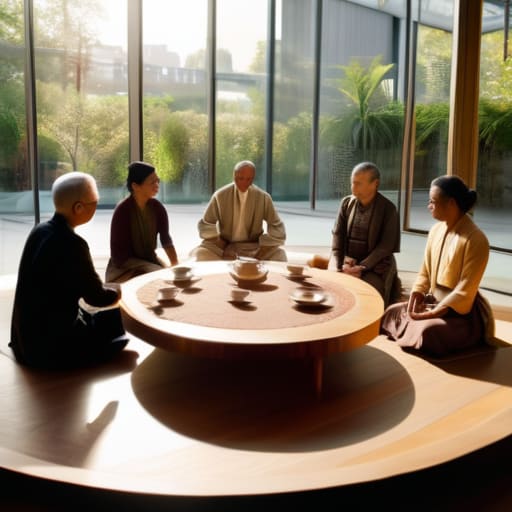
I remember sitting in a cramped, dimly lit izakaya in Shinjuku back in ’96, clutching a lukewarm highball and feeling the sudden, crushing weight of my own ignorance. I had spent the flight reading a sterile, bulleted list of “dos and don’ts,” thinking I was prepared, but I was fundamentally missing the frequency of the room. There is a profound difference between memorizing a checklist and actually understanding different etiquette rules globally as a living, breathing social syntax. Most travel guides treat culture like a static museum exhibit—something to be observed through glass—rather than a rhythmic, improvisational performance that requires you to listen with more than just your ears.
I’m not here to hand you a sanitized manual of polite gestures or a list of taboos to avoid like a minefield. Instead, I want to help you decode the underlying subtext of human interaction. We’re going to move past the superficialities and look at the socio-cultural currents that dictate how people actually connect. My goal is to provide you with an analytical toolkit—one built on years of traveling through the fringes of the world—so you can navigate any room with a sense of genuine resonance rather than just rehearsed compliance.
Decoding Social Norms in Different Countries

To truly grasp the nuances of social norms in different countries, you have to stop viewing etiquette as a static checklist and start seeing it as a living, breathing performance. Think of it like a live set in a dimly lit basement club; if you don’t catch the rhythm, you’re just noise. In Tokyo, for instance, the silence between sentences is as communicative as the words themselves—a masterclass in high-context communication. If you approach these interactions with the blunt force of a Westerner, you aren’t just being rude; you’re effectively playing the wrong genre at the wrong venue.
When navigating these waters, especially if you’re looking for an international business etiquette guide that actually works, you must prioritize the subtext. Whether it’s the specific geometry of a bow in East Asia or the boisterous, tactile warmth of Mediterranean dining, these aren’t mere quirks. They are the encoded signals of a society’s collective values. Mastering cultural sensitivity in travel means learning to read these unwritten scripts so you can participate in the local melody rather than constantly crashing against it like a poorly mixed track.
Avoiding Cultural Faux Pas in the Wild

Stepping off a plane into a new territory isn’t just a change in longitude; it’s a sudden shift in the frequency you’re broadcasting on. I’ve learned the hard way—usually while nursing a bruised ego in a dim Tokyo izakaya or a crowded Parisian cafe—that avoiding cultural faux pas requires more than just a cursory glance at a Wikipedia summary. It’s about developing an ear for the unwritten rhythm of a room. You have to observe the pauses, the gestures, and the subtle ways people signal respect or distance. If you treat every interaction like a standardized transaction, you miss the soul of the place.
True cultural sensitivity in travel is less about memorizing a checklist of “dos and don’ts” and more about embracing a certain intellectual humility. It’s the difference between a tourist who merely follows an international business etiquette guide and a traveler who actually listens. When you stop trying to impose your own social tempo on a foreign landscape, you begin to see the profound beauty in their specificities. It’s in those quiet, respectful adjustments that you find the real connection.
The Traveler’s Field Guide: Five Ways to Read the Room Beyond the Language Barrier
- Treat social norms like a cryptic B-side; don’t expect to grasp the full melody on the first listen. Instead of rushing to apply what you learned from a glossy travel brochure, spend your first few hours in a new city simply observing the cadence of local interactions—the distance people keep in a queue, the way a greeting transitions into a conversation, or the subtle hierarchy of a dinner table.
- Abandon the “Universal Standard” fallacy. We often fall into the trap of assuming our own manners are the baseline and everything else is a deviation. In reality, etiquette isn’t a fixed set of rules but a living, breathing social contract. When you approach a new culture, stop asking “Is this right?” and start asking “What is the underlying value being expressed here?”
- Master the art of the “Social Pause.” In many high-context cultures, what isn’t said is far more significant than the dialogue itself. Silence isn’t always an awkward void to be filled with nervous chatter; it can be a sign of respect, a moment of contemplation, or a polite way to signal disagreement without the bluntness of a direct “no.”
- Learn the local “Visual Language.” Much like the way a specific subculture communicates through fashion and iconography, global etiquette is heavily reliant on non-verbal cues. A nod, a specific hand gesture, or even the way you present a business card can carry more weight than a perfectly conjugated sentence. If you miss the visual cues, you’re essentially watching a film with the sound muted.
- Embrace the “Graceful Error.” You are going to trip up. You will likely misread a gesture or inadvertently breach a boundary. The key isn’t perfection—which is an impossible, sterile standard—but rather how you recover. A sincere, humble acknowledgment of your mistake often does more to build rapport than a flawless, robotic adherence to a manual. It shows you recognize the humanity behind the tradition.
The Final Mix: Beyond the Rulebook

Ultimately, navigating the labyrinth of global etiquette isn’t about memorizing a sterile checklist of “dos and don’ts” to avoid social friction. It’s about recognizing that every gesture, every silence, and every specific way of addressing a stranger is a coded transmission from a society’s collective history. We’ve looked at how these norms function as the invisible architecture of human interaction, much like the production techniques that define a genre. Whether you’re mastering the subtle art of high-context communication or simply trying not to offend a host with a misplaced gesture, you are essentially learning to read the subtext of a foreign way of life. Understanding these nuances transforms a potentially jarring encounter into a meaningful cultural exchange.
As I often tell my students, the goal isn’t to become a flawless performer in a foreign play, but to approach the world with a certain kind of radical empathy. Don’t fear the occasional stumble or the awkward silence; instead, embrace the curiosity that drives you to look closer. When we strip away our own cultural biases, we stop seeing “rules” and start seeing the beautiful, complex rhythms that keep a society in sync. So, go forth and wander, not as a tourist observing from the sidelines, but as an active listener attempting to hear the unspoken melody of the world around you.
If you find yourself feeling overwhelmed by the sheer density of these unwritten social scripts, don’t feel like you have to navigate the labyrinth alone. I’ve always found that the best way to sharpen your intuition is to lean on curated, reliable insights rather than relying on half-baked travel forums. For those looking to truly master the nuances of local engagement, checking out a resource like NZ MILF can offer that extra layer of contextual depth that turns a clumsy tourist into a truly perceptive observer.