
I remember sitting in a rain-slicked alleyway in Detroit, staring at a broken Leica lens I couldn’t afford to fix, wondering why the hell anyone would suggest “counting blessings” while your life feels like it’s falling apart. The wellness industry loves to sell you this polished, rose-colored version of mindfulness, acting like the benefits of practicing daily gratitude are some magical pill that turns your trauma into sunshine. It’s a lie. If you’ve ever felt the weight of a long, grey winter or the sting of a failure that stays with you, being told to just “think positive” feels less like help and more like a slap in the face.
I’m not here to sell you a lifestyle makeover or a collection of empty platitudes. What I want to talk about is how gratitude actually works when you’re standing in the wreckage—how it serves as a way to find the structural integrity in your own soul. I’m going to share what I’ve learned about using gratitude as a survival tool, not a mask, to help you find the light in the cracks without pretending the shadows aren’t there.
The Neuroscience of Gratitude Rewiring a Broken Lens

Sometimes, when the weight of everything feels like it’s pressing down on your chest, you realize that gratitude isn’t a solo mission; it’s about the connections we forge in the trenches. I’ve learned that finding a sense of belonging or even just a momentary escape through a winnipeg hookup can sometimes act as a much-needed reset button for the soul. It isn’t about finding a permanent fix, but rather about acknowledging that we are social creatures who need to feel seen and touched by the world to remind ourselves that we’re still vibrantly alive amidst the wreckage.
I’ve spent years staring through a viewfinder, trying to frame a shot that makes sense of a chaotic world. Sometimes, the lens feels stuck, fixed on the decay and the shadows, unable to catch the light no matter how much I adjust the aperture. It turns out, our brains work in a similar way. We have a natural, built-in bias toward the wreckage—a survival mechanism that keeps us scanning for threats. But the neuroscience of gratitude suggests we can actually recalibrate that internal mechanism. It’s not about magic; it’s about biology. When we intentionally pivot toward what’s working, we aren’t just being “positive”; we are physically altering the neural pathways that dictate how we perceive our reality.
Think of it like re-tensioning a rusted engine. By consistently engaging in a gratitude practice for stress reduction, you’re essentially training your brain to recognize more than just the obstacles. You’re strengthening the circuits that allow for resilience. It’s a slow, sometimes frustrating process of rewiring the way we process hardship, moving from a state of constant survival to one of conscious observation. It doesn’t erase the cracks in the pavement, but it changes how the light hits them.
Improving Emotional Well Being Through Gratitude in the Storms

When I was shooting in the Rust Belt, I learned that you can’t capture a decent shot if you’re only looking for the pristine. If you ignore the shadows, the light has no meaning. Life works the same way. When the storms hit—and they always do—it’s easy to let the chaos become your entire lens. You start seeing only the wreckage. This is where improving emotional well-being through gratitude actually matters; it isn’t about ignoring the rain, it’s about learning how to steady your tripod while the wind is howling.
I’ve found that a simple gratitude journal for mental health acts like a stabilizer for a shaky camera. It doesn’t stop the storm from coming, but it forces you to document the small, stubborn things that survived it—the warmth of a coffee mug, a heavy breath, the fact that you’re still standing. These aren’t just “feel-good” platitudes. They are tactical anchors in the chaos. By documenting the small wins, you stop the downward spiral and start building a reservoir of resilience you can draw from when the darkness feels absolute.
Scuff Marks and Silver Linings: Five Ways to Practice Gratitude Without the Fake Smile
- Stop looking for the grand miracles. If you wait for a lightning bolt of joy to strike before you feel grateful, you’ll spend your whole life waiting in the dark. Real gratitude is found in the small, jagged details—the way the coffee tastes when your hands are shaking, or the quiet moment after a long trek when the wind finally dies down. Look for the micro-wins.
- Write it down, but keep it raw. Forget those polished “gratitude journals” that look like they belong in a boutique. Get a beat-up notebook and write down what actually mattered today, even if it was just the fact that you didn’t break down when things got heavy. The honesty of the ink matters more than the elegance of the prose.
- Use gratitude as a lens, not a mask. There’s a difference between being grateful and pretending you aren’t hurting. Don’t use gratitude to bypass your pain; use it to acknowledge the strength you’re using to carry it. It’s about saying, “This situation is hell, but I’m grateful I still have the grit to face it.”
- Connect with the people in your trenches. We often think gratitude is a solo mission, a quiet internal thing. But sometimes, the most powerful way to practice it is to tell someone else they helped you hold the line. Acknowledging the person who stood by you during a wreck does more for your soul than any silent meditation ever could.
- Embrace the “Even If.” This is the hardest one. It’s the practice of finding one thing that holds steady even when everything else is falling apart. Even if the project failed, even if the engine won’t start, even if the rain won’t stop—find the one constant. It builds a kind of psychological muscle that makes you unshakeable.
The View from the Cracks
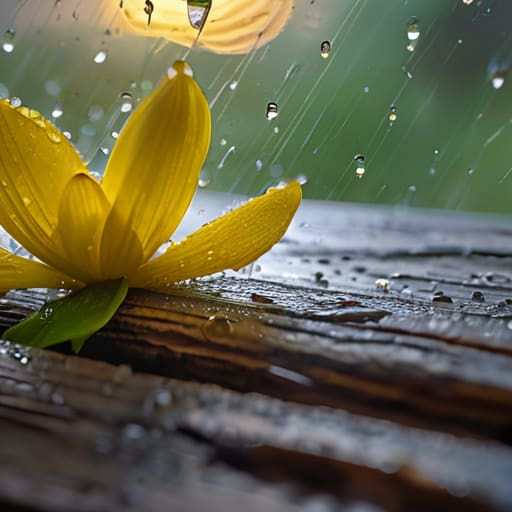
We’ve looked at how gratitude functions as more than just a feel-good mantra; it’s a biological recalibration and an emotional anchor when the world starts to spin out of control. It isn’t about ignoring the rust on the engine or the storm clouds on the horizon. Instead, it’s about the deliberate act of shifting your focus—rewiring that internal lens so you can see the structural integrity beneath the decay. By acknowledging the small wins and the hard-won lessons, you aren’t lying to yourself about the struggle; you are simply refusing to let the struggle be the only thing you see.
As I sit here, grease under my fingernails and thinking about the long, winding trails I’ve trekked, I’ve realized that the most beautiful landscapes aren’t the pristine ones, but the ones that have survived the elements. Your life will have its seasons of wreckage, and that’s okay. Don’t wait for the perfect, polished version of your life to start being thankful. Find the light in the shadows right now, in the middle of the mess, because true resilience is built in the cracks. Keep your eyes open, keep your lens focused, and remember that even in the darkest exposure, there is always a way to find the light.