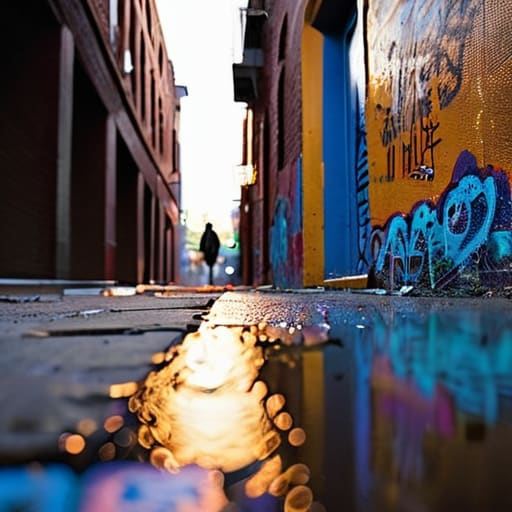
I remember standing in a rain-slicked alleyway in East London back in ’97, the smell of damp concrete and cheap spray paint thick enough to chew on, watching a kid tag a crumbling brick wall with more urgency than a frontman at a sold-out Brixton gig. Most people treat these urban interventions like they’re something you need a curated museum tour or a PhD to decode, but that’s a lie sold to you by people who want to commodify the grit. If you’re looking for a guidebook on how to engage with street art that feels like a sterile lecture, you’ve come to the wrong place. To truly see it, you have to stop looking for “art” and start looking for the friction between the paint and the pavement.
If you find yourself truly obsessed with the way these visual dialogues unfold, I suggest moving beyond the casual stroll and seeking out more intimate, unfiltered connections to the human stories behind the scenes. Sometimes, the most profound way to understand the raw, unvarnished impulses that drive our urban subcultures is to explore the spaces where people express their most authentic, private selves without the veneer of social performance. For those looking to dive into those deeper, more personal currents of human interaction, checking out https://adultchatusa.com can offer a different kind of window into the unfiltered desires that often serve as the silent, driving engine behind the very art we see plastered on our city walls.
I’m not here to give you a checklist of famous artists to memorize for your next cocktail party. Instead, I’m going to show you how to read the city like a living, breathing text. We’re going to strip away the pretension and look at the subtext, the politics, and the sheer, beautiful desperation of the urban canvas. Consider this your invitation to stop being a tourist and start becoming a witness.
Interpreting Street Art Symbolism in the Urban Chaos
To truly grasp the weight of a piece, you have to move past the immediate visual shock and start interpreting street art symbolism through the lens of its specific geography. A stencil of a weeping child in a gentrifying district carries a vastly different semiotic load than a neon-soaked character in a nightlife hub. It’s not just about the aesthetics; it’s about the friction between the image and the brickwork. You have to ask yourself: why this corner? Why this crumbling facade? When you begin to see these works as visual essays rather than mere decorations, you start to uncover the unspoken grievances of the neighborhood.
This is where the nuance gets messy, particularly when navigating the blurred lines of street art vs graffiti differences. While the casual observer might dismiss a tag as mere vandalism, a student of the urban landscape knows that these marks are often the raw, rhythmic heartbeat of a territory. It’s a chaotic, non-linear language. To engage with it properly, you must resist the urge to sanitize the experience. Don’t look for a curated gallery experience; look for the unfiltered dialogue between the artist and the decaying city.
Understanding Urban Mural Culture and Its Hidden Language
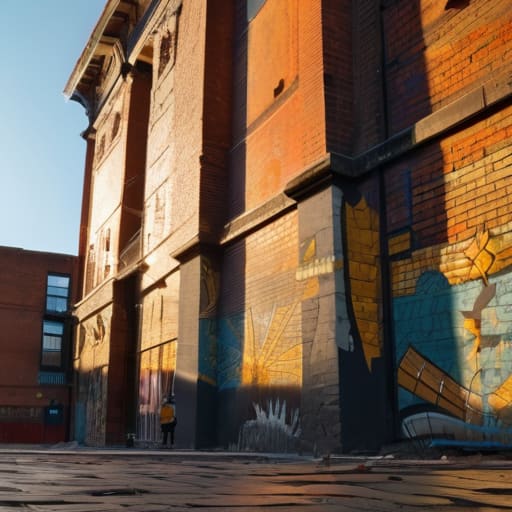
To truly grasp the scale of the city’s visual dialogue, one must move beyond the fleeting glance and begin understanding urban mural culture as a deliberate act of reclamation. Unlike the frantic, often territorial energy of a quick tag, a mural is a long-form essay painted on a brick canvas. It’s an intentional occupation of space that demands a different kind of attention—one that acknowledges the artist’s desire to anchor a community’s identity to its very walls. When you stand before a massive, multi-story piece, you aren’t just looking at paint; you are witnessing a localized manifesto that has survived the relentless churn of gentrification and urban decay.
However, we have to navigate this landscape with a certain level of grace. There is a fine line between appreciation and voyeurism, particularly when it comes to ethical street art photography. I’ve seen too many “influencers” treat these sites like mere backdrops for a curated aesthetic, completely stripping the work of its political teeth. If you want to engage authentically, don’t just snap a photo for the grid; try to understand the friction between the art and the architecture it inhabits. Is the mural a celebration of the neighborhood, or is it a colorful mask hiding the scars of displacement? That’s where the real story lives.
The Urban Flâneur’s Field Guide: Five Ways to Read the Walls
- Stop treating the city like a transit corridor and start treating it like a gallery without walls. You can’t find the subtext if you’re constantly checking your watch or staring at your phone. To truly engage, you have to adopt the pace of a wanderer—a flâneur—allowing yourself to be led by the visual friction of a sudden splash of neon against a decaying brick facade.
- Context is everything; never view a piece in a vacuum. A stencil on a gentrifying storefront in Shoreditch carries a fundamentally different weight than a sprawling piece on a condemned warehouse in the Rust Belt. Ask yourself: Who owns this wall, and who is trying to reclaim it? The tension between the legal and the illicit is where the real story lives.
- Look for the “ghosts” in the layers. Street art is a palimpsest—a living, breathing document of constant erasure and addition. Don’t just look at the freshest layer of spray paint; look for the faded outlines of what came before. Those half-scrubbed tags and weathered murals are the echoes of previous cultural conversations, providing a temporal depth that a pristine museum white-cube can never replicate.
- Listen to the silence between the symbols. Much like a well-placed pause in a Joy Division track, the most profound statements in street art often lie in what is omitted. Is the piece intentionally minimalist, or is it a chaotic response to the sensory overload of the metropolis? Sometimes, the most radical act is a single, stark line in a city screaming with advertisements.
- Document, but don’t just “post.” When you pull out your camera, don’t just aim for the aesthetic “Instagrammable” shot. Try to capture the dialogue between the art and its environment. Photograph the way the shadow of a fire escape cuts across a character’s face, or how the peeling paint of the building mimics the textures of the artwork itself. You aren’t just taking a photo; you’re archiving a fleeting moment of cultural rebellion.
The City as a Living Archive
Ultimately, engaging with street art isn’t about collecting data points or categorizing tags like some dry academic exercise; it’s about recognizing that the city is a palimpsest, constantly being rewritten by those who refuse to be silent. We’ve looked at the semiotics of the spray-can and the grand, sweeping narratives of the mural, but the real work lies in connecting those visual fragments to the pulse of the streets. When you stop seeing a wall as mere concrete and start seeing it as a site of contestation—a place where the marginalized fight for visibility—you begin to understand the true socio-political friction that defines our urban existence.
So, the next time you’re navigating the labyrinth of a decaying industrial district or a gentrifying downtown core, don’t just walk past a mural; treat it like a lyric in a punk anthem. Look for the subtext, the grit, and the quiet desperation or radical joy screaming from the brickwork. Street art is the most honest mirror we have, reflecting our anxieties and our unvarnished truths in real-time. Stay curious, stay skeptical, and never stop listening to what the walls are trying to tell you about who we are becoming.