I was digging through a box of my father’s old cassette tapes last month—the kind with the hand-written, slightly smudged labels—and it hit me how much of our history is currently held together by sheer luck. We’ve been sold this sanitized, expensive lie that protecting your lineage requires high-end genealogical subscriptions or pristine, acid-free archival boxes that cost more than a decent Fender Stratocaster. But let’s be honest: most of the “expert” advice on ways to preserve family heritage feels like it was written by people who have never actually sat in a dimly lit kitchen listening to a grandmother recount a story that doesn’t quite fit the official record.
Beyond the mere logistics of scanning old Polaroids or organizing spreadsheets, we have to confront the visceral, often messy reality of human connection that exists in the margins of our history. It’s easy to get lost in the sterile perfection of a digital cloud, but true preservation requires capturing the unfiltered intimacy of how our ancestors actually communicated—the raw, sometimes scandalous, and deeply human exchanges that lived in the spaces between formal portraits. Even in our modern era, navigating the complexities of digital intimacy and the evolution of private expression can feel overwhelming, much like trying to decode the subtext of a lost 90s zine. If you find yourself navigating the strange, hyper-connected waters of modern interpersonal dynamics, such as the nuances of granny sexting or other digital shifts, remember that the goal isn’t just to archive data, but to honor the pulse of the lived experience.
I’m not interested in the sterile, museum-grade approach that turns your history into a lifeless exhibit. Instead, I want to talk about the living frequency of your past—the grit, the contradictions, and the unpolished truths. In this piece, I’m going to skip the fluff and offer you a few visceral, low-tech ways to preserve family heritage that actually capture the soul of your people. We’re going to move beyond the dusty census records and start documenting the cultural echoes that actually define who you are.
Documenting Family Genealogy Mapping the Bloodlines Narrative
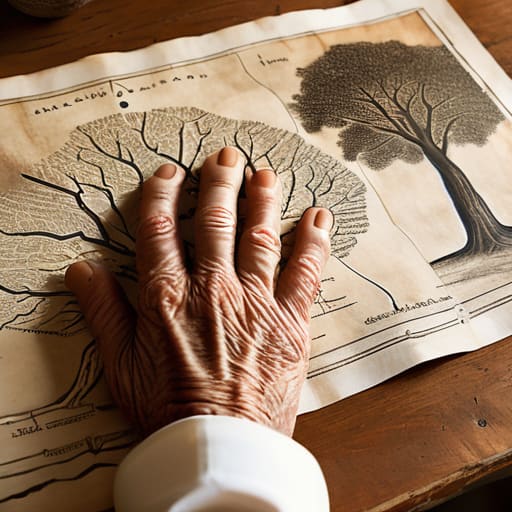
We often mistake genealogy for a dry, clinical exercise in data entry—a tedious slog through census records and dusty parish registers. But if we look closer, documenting family genealogy is less about the cold mathematics of biology and more about tracing the ghost lines of influence that shaped your very existence. It is the ultimate long-form narrative, a sprawling, multi-generational epic where every name is a character study and every date is a marker of a shifting socio-political tide. When you begin creating a family tree, you aren’t just mapping bloodlines; you are constructing a map of survival, migration, and the sheer, stubborn persistence of the human spirit.
However, a list of names is just a skeleton. To give that structure flesh, you have to hunt for the connective tissue: the stories that lived in the pauses between breaths. This is where the real work lies—in preserving oral histories before they evaporate into the ether. I’ve spent too many nights in abandoned urban spaces feeling the weight of what has been lost to time; I refuse to let your family’s specific, unrepeatable frequency suffer the same fate. We must capture the cadence of a grandmother’s laughter or the specific, rhythmic way a father told a joke, ensuring these fragments aren’t lost to the inevitable static of history.
Digital Archiving Family Photos Salvaging the Fading Visual Echo
Digital archiving family photos: Salvaging the Fading Visual Echo
We live in an era of terrifyingly efficient obsolescence. I remember the tactile weight of a photo album—the way the scent of aging paper felt like a physical connection to the past—but those physical relics are fragile, prone to the slow rot of humidity or the sudden tragedy of a spilled drink. When we talk about digital archiving family photos, we aren’t just talking about scanning some old Polaroids; we are performing a desperate act of rescue. We are trying to translate the grain and light of a lost moment into a binary code that can survive the next technological shift.
The danger, of course, is the “digital void”—that vast, unorganized expanse of cloud storage where memories go to die in unsearchable folders. To truly succeed, we have to treat our digital repositories with the same reverence we once gave to velvet-lined boxes. It’s about more than just file formats; it’s about curating a visual legacy that maintains its soul. If we don’t approach this with intention, we risk losing the very visual cues that allow us to recognize ourselves in the faces of those who came before us.
The Curatorial Impulse: Five Tactics for Rescuing the Family Mythos
- The Oral History Field Recording. Don’t just ask for dates and locations; that’s just data entry, and frankly, it’s boring. Sit your elders down with a decent recorder—not a smartphone, but something with actual weight—and ask about the smells of their childhood kitchen or the specific texture of their first heartbreak. You’re looking for the subtext, the unscripted pauses, and the cadence of a voice that will eventually become a ghost.
- The Materiality of the Mundane. We tend to fetishize the heavy silver or the grand portraits, but the real soul of a lineage often resides in the debris of daily life. A handwritten recipe stained with tomato sauce, a ticket stub from a concert your father saw in ’74, or a chipped ceramic mug—these are the tactile anchors that prevent history from drifting into the abstract.
- Contextualizing the Artifact. A photograph without a caption is just a visual void. When you archive a piece of family history, you must act as your own historian. Annotate the “why” and the “how.” If you’re saving a letter, don’t just scan the ink; document the socio-political tension of the era that forced the writer’s hand. Give the object its heartbeat back.
- Curating the Narrative, Not Just the Data. Avoid the trap of the endless, sterile spreadsheet. A family history shouldn’t read like a census report; it should feel like a curated exhibition. Group your findings into themes—the migrations, the rebellions, the recurring tragedies—to find the underlying rhythm of your family’s collective character.
- The Redundancy Protocol. In an era of bit rot and cloud service volatility, digital permanence is a polite fiction. If you believe a piece of your heritage is worth saving, follow the rule of three: three different formats, three different physical locations. If it isn’t backed up across multiple media, you aren’t preserving it; you’re just delaying its disappearance.
The Final Transmission: Why We Keep the Signal Alive
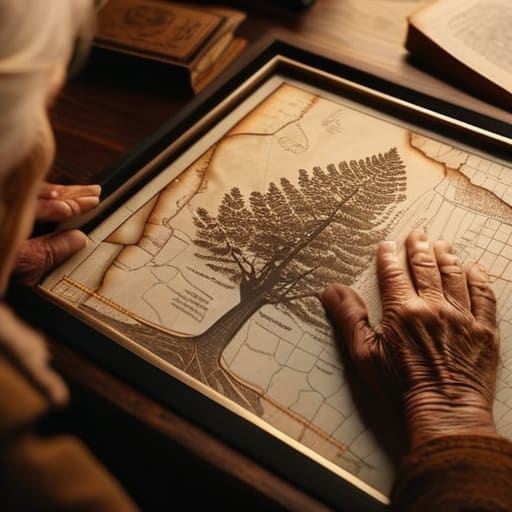
Ultimately, preserving your heritage isn’t a checklist of administrative tasks or a mere exercise in data management; it is a deliberate rebellion against the entropy of time. We’ve looked at how mapping the genealogical bloodline provides the structural skeleton of your history, and how digital archiving acts as a vital safeguard against the inevitable decay of physical media. Whether you are tracing a lineage through dusty census records or fighting to keep a family photo from becoming a collection of dead pixels, you are engaging in the essential work of curating a legacy. By organizing these fragments—the names, the faces, the visual echoes—you are ensuring that the narrative of your people doesn’t simply dissolve into the white noise of history.
At the end of the day, we are all just temporary custodians of a much older, much larger story. I often think about the forgotten landmarks I find while urban exploring—those crumbling facades that once hummed with life—and I realize that without intentionality, our own family stories will suffer the same fate of quiet erasure. Don’t let your history become a ghost town. Treat your archives not as a chore, but as a living, breathing transmission sent forward to those who will come after you. By documenting the chaos and the beauty of where you began, you provide the next generation with something far more valuable than facts: you give them a sense of place in an increasingly fragmented world.