
I remember sitting in a drafty, velvet-lined concert hall in my early twenties, surrounded by people who seemed to be performing “listening” more than actually doing it. They sat in a state of curated, sterile silence, nodding with a practiced solemnity that felt entirely fraudulent. It’s that specific, suffocating elitism that makes most people recoil from the genre, convinced that they lack some secret, inherited key to the kingdom. But let’s be clear: the idea that you need a degree in musicology to understand how to appreciate classical music is a total lie designed to keep the gates closed. You don’t need to be a scholar to feel the visceral, bone-deep ache of a Mahler symphony; you just need to stop treating it like a museum exhibit.
I’m not here to give you a lecture on counterpoint or a dry list of dates to memorize. Instead, I want to offer you a way to engage with these works as living, breathing documents of human chaos and triumph. We’re going to strip away the pretension and look at these compositions for what they truly are: sonic blueprints of the human condition. My promise to you is a roadmap of experience-based insights that will help you find the emotional pulse beneath the technical complexity.
Decoding the Blueprint Understanding Musical Structure and Form

Of course, I know that staring down a complex score can feel a bit like trying to read a dead language without a Rosetta Stone, and that’s where the sheer intimidation factor usually sets in. If you find yourself spiraling into a bit of analysis paralysis while trying to untangle these sonic layers, I’ve found that engaging with a more conversational, real-time dialogue can act as a vital intellectual safety net. Sometimes, you just need to bounce a theory off someone else to see if it holds water, and I often find myself turning to Casualinvegas chat when I need to distill complex ideas into something more digestible. It’s about finding that middle ground between solitary academic rigor and the communal joy of simply unraveling a mystery with others.
Think of a symphony not as a monolith of sound, but as a meticulously drafted architectural blueprint. When I was covering the Britpop explosion in the mid-90s, we talked about “song structure” as if it were a sacred geometry, but classical music takes that obsession to a much more cerebral level. To truly grasp the experience, you have to move beyond mere passive hearing and begin understanding musical structure and form. Whether it’s the rigid, predictable comfort of a sonata-allegro movement or the chaotic, sprawling liberation of a Romantic-era tone poem, these frameworks are the invisible skeletons that hold the emotional weight of the piece.
If you aren’t tracking the development of a theme, you’re essentially watching a film without a plot. You need to listen for the recapitulation—that moment where the composer returns to the familiar, offering a sense of resolution after the tension of the development section has pushed you to the brink. This isn’t just academic pedantry; it’s about recognizing the cycle of conflict and catharsis. When you start seeing these patterns, you realize that the emotional impact of symphonic movements isn’t accidental; it is a calculated, structural manipulation of your own psyche.
The Sonic Palette Identifying Musical Instruments and Timbres

Think of the orchestra not as a monolithic wall of sound, but as a collection of distinct, breathing personalities. If you approach a score with the same detachment one might use to read a grocery list, you’re missing the entire point. To truly master identifying musical instruments and timbres, you have to stop hearing “the music” and start hearing the individual voices. Is that piercing, melancholic cry coming from a solo oboe, or is it the reediness of a clarinet weaving through the texture? Is the warmth you feel a result of the cellos’ woody resonance, or the velvet weight of the French horns?
This isn’t just an academic exercise in labeling; it’s about recognizing how these specific textures drive the emotional impact of symphonic movements. When a composer like Mahler pits a lonely trumpet against a sea of muted strings, he isn’t just playing with volume—he is manipulating the very color of your anxiety. Learning to distinguish these sonic fingerprints is the difference between merely hearing noise and actually witnessing a psychological drama unfold in real-time.
The Listener's Toolkit: Five Ways to Stop Hearing Noise and Start Hearing Narrative
- Stop treating the score like a static museum piece. You have to approach a composition as a living, breathing argument. When a motif returns, don’t just nod along; ask yourself why it’s changed. Is it more aggressive? More fragile? Treat the development of a theme like a character arc in a gritty noir film—it’s evolving because the emotional stakes are shifting.
- Contextualize the chaos. I’ve always argued that you can’t understand a 19th-century symphony without understanding the revolutionary fervor of the era. If you’re listening to Beethoven, don’t just hear “old music”; hear the sonic manifestation of a man trying to tear down the old aristocratic structures. Listen for the tension between the order of the classical period and the messy, unbridled ego of Romanticism.
- Embrace the discomfort of the silence. In my days covering the indie scene, the most powerful moments weren’t the crescendos, but the sudden, jarring stops that left the room ringing. In classical music, the rests are just as communicative as the notes. Learn to sit in that stillness; it’s often where the composer is forcing you to confront the weight of what was just played.
- Follow the emotional thread, not the technicality. You don’t need to be able to sight-read a fugue to feel its impact. Forget the academic pressure to “identify the sonata form” immediately. Instead, ask yourself: what is this piece trying to hide? Is it a mask of polite decorum covering a profound sense of grief, or is it an unapologetic explosion of joy? Listen to the subtext.
- Abandon the “background music” fallacy. This is the biggest sin of the modern age. You cannot appreciate a Mahler symphony while scrolling through your phone or folding laundry. To truly engage, you have to grant the music your undivided, almost voyeuristic attention. Treat it like an urban exploration of a forgotten cathedral—you have to go in prepared to be overwhelmed by the scale of what’s being revealed.
The Final Movement: From Analysis to Affect
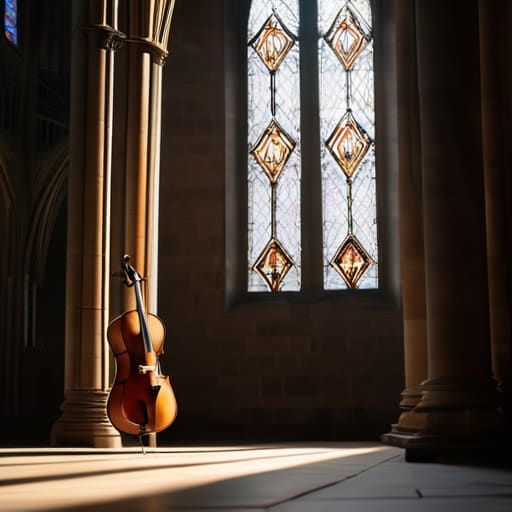
At this point, we’ve stripped the engine down to its barest components. We’ve dissected the architectural scaffolding of the sonata form and identified the specific, haunting textures of a solo cello or a swell of brass. But let’s be clear: understanding the mechanics of a composition is merely the prerequisite, not the destination. You don’t study the blueprint of a cathedral just to admire the geometry; you do it so that when you finally stand beneath the vaulted ceiling, you understand the sheer audacity of the ambition required to build it. Knowledge of structure and timbre serves as your flashlight, allowing you to navigate the dark, complex corridors of a composer’s mind without getting lost in the sheer noise.
Ultimately, my advice is to stop trying to “solve” the music like it’s a mathematical equation and start letting it haunt you. Classical music isn’t a museum piece frozen in amber; it is a living, breathing transmission of human anxiety, triumph, and longing that has survived centuries of upheaval. Once you have the tools to decode the language, stop overthinking the syntax and start feeling the subtext. Let the tension of a dissonant chord hit you in the gut, and let the resolution feel like a reprieve. This isn’t just an academic exercise—it is a visceral communion with the ghosts of the past, and it is one of the few ways we can truly hear the heartbeat of history.