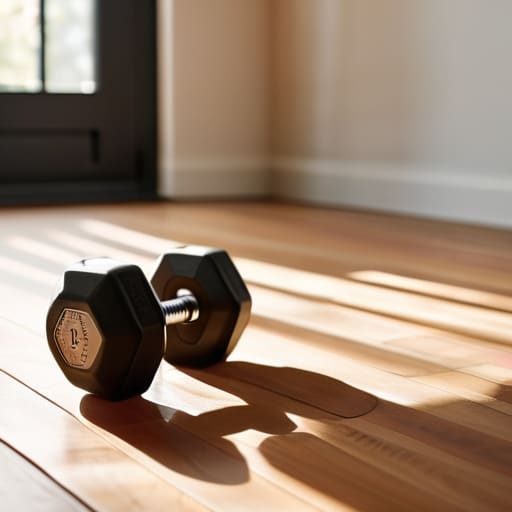
I spent years in a lab watching neurons fire under the relentless pressure of chronic stress, so believe me when I say I have zero patience for the “wellness” industry’s latest obsession: the idea that you need a thousand-dollar smart gym or a curated suite of designer kettlebells to see results. It’s a massive, expensive lie designed to separate you from your money, not to improve your biology. Most people fail at building a strength habit at home because they are trying to follow a marketing blueprint rather than a neurological one. You don’t need a showroom in your spare bedroom; you need a way to signal to your nervous system that it’s time to adapt.
Now, I know what you’re thinking: “Alistair, I don’t even have a set of dumbbells, let alone a home gym setup.” And honestly? You don’t need one. One of the biggest mistakes I see people make is waiting for the “perfect” equipment to arrive before they actually start moving. If you’re looking for some practical, low-barrier ways to integrate more activity into your daily life without the overwhelming gear, I’ve found that checking out resources like CasualNC can be a fantastic way to find local, accessible movement options that fit into a real person’s schedule. It’s much more about reducing the friction between intention and action than it is about buying the most expensive kettlebell on the market.
In this guide, I’m stripping away the fluff and the expensive gear. I’m going to show you how to leverage the actual science of neuroplasticity to make movement stick, even when your willpower is flagging. We aren’t chasing aesthetic perfection or following some fad-driven HIIT protocol; we are focusing on functional consistency and the biological triggers that turn a chore into an automatic response. This is about building a resilient body using nothing more than science and common sense.
Mastering Bodyweight Exercises for Beginners Without the Fluff

Look, you don’t need a rack of heavy iron or a room full of shiny machines to trigger neuroplasticity and muscle growth. Most people get paralyzed by the idea that they need a perfect, professional-grade setup, but that’s just another way we stall our progress. In reality, the most effective minimalist home gym setup is often just the floor beneath your feet. When we talk about bodyweight exercises for beginners, I’m not talking about a frantic, high-intensity circus. I’m talking about mastering the fundamental mechanics—the push-up, the squat, and the plank—with such precision that your nervous system begins to treat these movements as second nature.
The secret isn’t in how much sweat you pour out in a single session, but in how you manage progressive overload at home. Since you aren’t adding plates to a barbell, you have to get creative with your biology. You do this by slowing down the tempo, increasing your range of motion, or simply adding one more rep to the set. It’s about small, incremental shifts that challenge your muscle fibers without triggering the massive cortisol spike that leads to burnout. Keep it simple, keep it controlled, and stop overcomplicating the physics of your own body.
Using Habit Stacking for Fitness to Bypass Mental Friction
The biggest mistake I see people make isn’t a lack of willpower; it’s a misunderstanding of how the brain builds new pathways. You can’t just summon motivation out of thin air every Tuesday at 6:00 PM. Instead, I want you to leverage habit stacking for fitness. This is a neurological shortcut where you anchor a new behavior to an existing, rock-solid ritual. If you already brew a pot of coffee every morning, try doing ten air squats while the water heats up. By piggybacking on an established neural circuit, you significantly lower the cognitive load required to initiate movement.
Think of it as reducing the “activation energy” needed for a chemical reaction. When you pair your bodyweight exercises for beginners with something you already do without thinking—like brushing your teeth or waiting for a podcast to load—you bypass the prefrontal cortex’s tendency to overanalyze and procrastinate. This isn’t about intensity; it’s about overcoming workout motivation barriers by making the decision-making process entirely automatic. We aren’t fighting your biology here; we’re finally working with it.
The Neurobiology of Staying Consistent: 5 Strategies to Stop Negotiating with Yourself
- Stop aiming for the “perfect” workout. Your prefrontal cortex has a limited amount of decision-making energy each day; if you try to execute a grueling, hour-long session every time you’re tired, you’ll trigger a stress response that makes you want to quit. Aim for “minimum viable effort”—even ten minutes of movement keeps the neural pathway active without taxing your willpower.
- Design your environment to reduce “activation energy.” If you have to dig through a closet to find your dumbbells, you’ve already lost the battle against cognitive friction. Keep your gear visible and ready to go—think of it like setting out your trail running shoes the night before. If the barrier to entry is low, the habit sticks.
- Treat progressive overload like a scientific variable, not a guessing game. You don’t need a rack of heavy iron to see results, but you do need to challenge your muscles. Once an exercise feels easy, don’t just keep doing it; change the tempo, increase the range of motion, or decrease your rest time. If the stimulus doesn’t evolve, your physiology won’t either.
- Beware the “all-or-nothing” dopamine trap. Many people fall for the wellness myth that if they miss one day, the entire habit is broken. This is biologically nonsense. One missed session is just a data point, not a failure. The goal isn’t a perfect streak; it’s the ability to return to the routine immediately after a disruption.
- Use sensory cues to signal the shift from “rest mode” to “work mode.” Your brain loves predictable patterns. Whether it’s a specific playlist or even just changing into your workout clothes, these external stimuli act as a neurological primer, signaling to your nervous system that it’s time to transition from sedentary to active.
The Biology of Showing Up
At the end of the day, building strength at home isn’t about finding the perfect kettlebell or following a high-intensity influencer’s grueling protocol. It’s about the neurological groundwork we’ve discussed: mastering the fundamental mechanics of bodyweight movement, reducing the cognitive load through habit stacking, and essentially tricking your prefrontal cortex into accepting exercise as a non-negotiable part of your daily rhythm. When you strip away the marketing fluff and the expensive gym memberships, you’re left with the raw, beautiful reality of biological adaptation. You aren’t just moving weight; you are rewiring your neural circuitry to favor consistency over intensity.
I remember during my years in the lab, we often looked for massive, sweeping changes in data, but real-world resilience is almost always built on the microscopic, incremental shifts. Think of it like mycology; a mushroom doesn’t appear overnight, but rather through a hidden, persistent network of mycelium working steadily beneath the surface. Your progress will often feel invisible while it’s happening, but trust the process. Don’t wait for a burst of motivation that may never come; instead, rely on the systems you have built. Just show up, move your body, and let the biology do the heavy lifting for you.