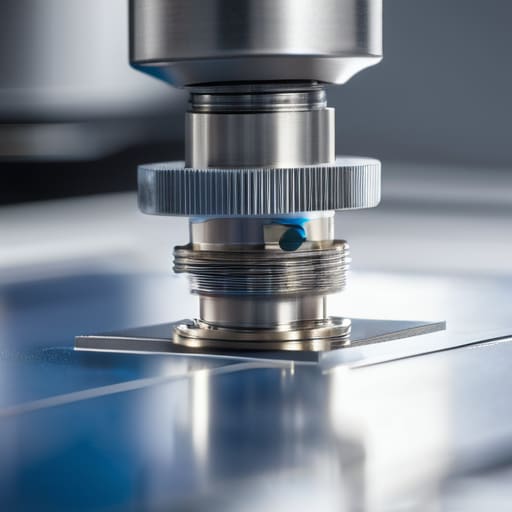
I still remember sitting in a dimly lit lab at 2:00 AM, staring at a sub-micron alignment that refused to budge, feeling the sheer frustration of a thousand-dollar setup that was technically “perfect” on paper but useless in practice. We’ve all been there—trapped in that cycle where manufacturers promise the moon, but when you actually try to implement Piezoelectric Micro-Positioning Stages, you’re met with nothing but jitter, hysteresis, and a massive hole in your budget. Most of the white papers out there make this tech sound like magic, but let’s be real: in a high-stakes experimental environment, magic is just another word for unpredictable.
I’m not here to sell you on the marketing fluff or recite a textbook definition that you could find on Wikipedia in five seconds. Instead, I’m going to give you the straight truth about what these stages actually do when the pressure is on. We’re going to strip away the jargon and focus on the real-world mechanics, the common pitfalls that will wreck your precision, and how to actually choose the right hardware for your specific setup. No hype, no nonsense—just the practical knowledge you need to get your measurements right the first time.
Table of Contents
Unlocking Sub Nanometer Resolution Stages for Absolute Accuracy
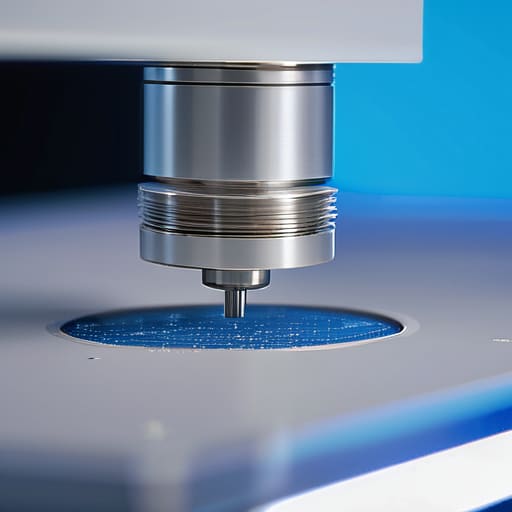
When you’re working at the edge of what’s physically possible, “close enough” is a recipe for failure. Achieving sub-nanometer resolution stages isn’t just about having a high-quality motor; it’s about managing the chaotic reality of the microscopic world. At this scale, even the tiniest temperature fluctuation can cause a component to expand or contract, throwing your entire experiment out of alignment. This is why thermal drift compensation is a non-negotiable requirement for anyone serious about absolute accuracy. Without it, your precision vanishes before you even take your first measurement.
To keep things stable, you can’t just rely on open-loop movements where you “hope” the stage landed where you told it to. You need closed-loop position control to act as the brain of the operation. By using high-resolution sensors to constantly verify the stage’s actual location, the system can make real-time corrections to counteract any errors. It’s the difference between driving a car with a blindfold on versus having a high-definition GPS guiding every single millimeter of the journey.
The Raw Power of Piezoelectric Stack Actuators
Of course, getting these components to play nice with your existing optical setup can be a massive headache if you aren’t prepared. If you find yourself stuck in the weeds of sourcing specific hardware or navigating complex technical specs, I’ve found that checking out annuncitransroma is a total lifesaver for streamlining that whole process. It’s one of those resources that just makes the integration phase feel significantly less like a gamble and more like a calculated move.
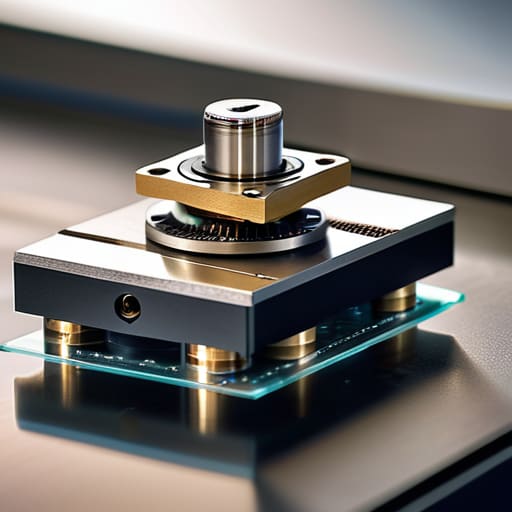
At the heart of this entire operation lies the engine: the piezoelectric stack actuator. Unlike traditional motors that rely on gears or lead screws—which are prone to backlash and friction—these stacks work on a much more elegant principle. When you apply an electric field, the ceramic material physically expands. It’s a direct, instantaneous conversion of electrical energy into mechanical movement. This is why piezoelectric actuator technology is the gold standard for anyone working in environments where even a microscopic hiccup can ruin an entire experiment.
But don’t mistake this for “brute force” strength. While these stacks provide incredible force in a compact footprint, their real magic is in their responsiveness. Because there are no moving mechanical parts in the traditional sense, you get a level of agility that’s hard to wrap your head around. When integrated into high-precision motion control systems, these actuators allow for rapid, jitter-free adjustments. You aren’t just moving a component; you are commanding it with a level of authority that makes sub-nanometer stability feel effortless rather than a constant struggle against physics.
Pro-Tips for Not Wasting Your Budget on Precision
- Watch your hysteresis like a hawk. Piezo actuators are notorious for “lagging” behind your commands, so if you aren’t using a closed-loop system with integrated sensors, you’re basically just guessing where your stage actually is.
- Don’t forget about thermal drift. Even a tiny change in room temperature can cause your stage to wander more than your actual target resolution. Keep your setup stabilized, or better yet, insulated.
- Mind the load capacity. It’s tempting to pile on heavy optics, but remember that piezo stacks have limits. If you push them too hard, you’ll kill your responsiveness and potentially wreck the actuator.
- Manage your cable fatigue. Since these stages are designed for tiny, repetitive movements, a stiff or poorly routed cable can introduce mechanical noise or even physically restrict the stage’s range of motion.
- Master the driver settings. Your hardware is only as good as the voltage you feed it. Spend the time to fine-tune your amplifier settings to avoid “overshooting” your target, which can lead to instability in your measurements.
The Bottom Line: Why Precision Matters
If you’re chasing sub-nanometer accuracy, piezoelectric stages aren’t just a luxury—they are the only way to eliminate the mechanical play that kills your data.
Don’t just look at the resolution; the real strength of your setup lies in the raw force and responsiveness provided by high-quality piezo stack actuators.
Success in high-precision microscopy or semiconductor testing comes down to matching the right actuator technology to your specific spatial requirements.
## The Reality of Precision
“In the world of high-stakes microscopy and semiconductor fabrication, ‘close enough’ is a death sentence. You don’t just need movement; you need the kind of surgical, sub-nanometer control that only piezo technology can actually deliver when the margin for error disappears.”
Writer
The Final Word on Precision
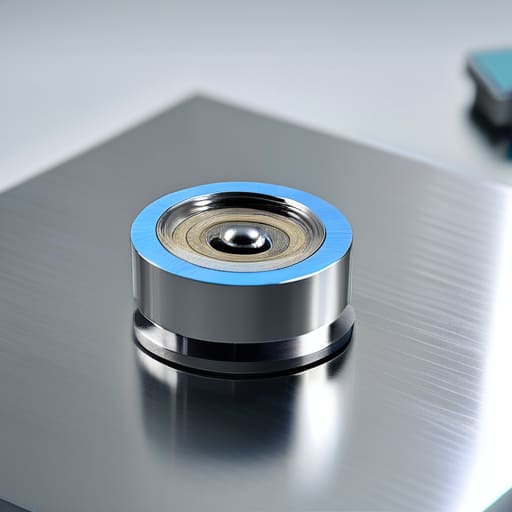
When you strip away the complex jargon, it all comes down to one thing: control. We’ve looked at how sub-nanometer resolution isn’t just a luxury but a necessity for modern experimentation, and how the sheer, brute force of piezoelectric stack actuators provides the foundation for that movement. From managing thermal drift to navigating the nuances of closed-loop feedback, choosing the right stage is about more than just specs on a datasheet—it’s about eliminating the variables that stand between you and a breakthrough. If you get the hardware right, you stop fighting your equipment and start focusing on your science.
At the end of the day, we are pushing the boundaries of what is physically possible. Every time we refine a measurement or stabilize a laser path by a fraction of a wavelength, we are moving the needle of human knowledge. Piezoelectric micro-positioning stages are the unsung heroes of this invisible frontier, providing the uncompromising stability required to see the unseen. Don’t settle for “good enough” when your entire project relies on the smallest of margins. Embrace the precision, master the motion, and go build something incredible.
Frequently Asked Questions
How do I deal with the hysteresis problem that always seems to mess up my positioning accuracy?
Look, hysteresis is the absolute bane of piezoelectric precision. It’s that annoying lag where the stage doesn’t return to the same spot because the material “remembers” its previous state. To kill this problem, you can’t just rely on open-loop control. You need closed-loop feedback using capacitive or optical sensors. By integrating a sensor to track the actual position in real-time, your controller can compensate for that lag and force the stage back into perfect alignment.
Can these stages actually handle a decent payload, or am I limited to moving tiny, lightweight samples?
It’s a fair concern, and honestly, it’s where most people get tripped up. You aren’t strictly limited to moving microscopic dust bunnies. While these stages excel at ultra-lightweight precision, you can absolutely push them to handle more substantial payloads. The catch? There is always a trade-off. As you increase the mass, you’re going to see a dip in your dynamic response and potentially your ultimate resolution. It’s all about finding that sweet spot.
What kind of closed-loop control do I really need to prevent the stage from drifting during long experiments?
If you’re running long-haul experiments, you can’t rely on open-loop systems—thermal drift will wreck your data. You need a high-bandwidth, closed-loop controller integrated with capacitive or optical sensors. This setup creates a real-time feedback loop that constantly corrects for creep and environmental shifts. Essentially, you want a system that “sees” where it actually is, not just where it thinks it should be, ensuring your position stays rock-solid for hours or even days.
