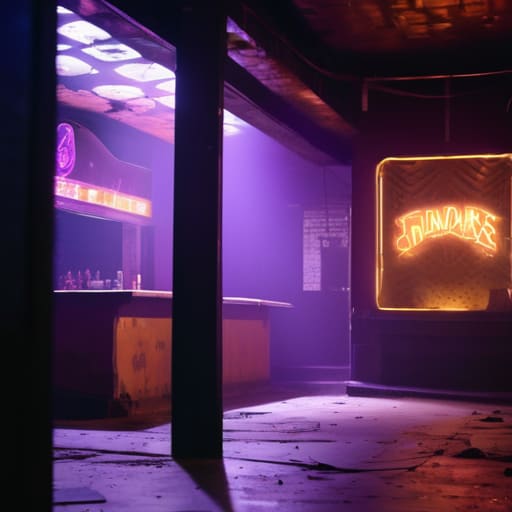
I remember standing outside a basement club in East London last November, the air tasting of damp concrete and stale cigarettes, waiting for a door to open that felt like it led to a different dimension. There was this specific, vibrating tension in the crowd—a desperate, almost frenetic hunger for contact—that you just didn’t see in the pre-2020 era. We’ve all heard the sanitized, industry-driven narratives about the “resurgence” of the scene, but they miss the point entirely. They treat it like a simple recovery, ignoring the profound psychological reconfiguration that occurred while we were all staring at screens. The truth is far more complex; we aren’t just returning to the dance floor, we are fundamentally redefining it. To understand how nightlife culture shifted after the pandemic, you have to look past the strobe lights and see the collective exhaustion etched into the very way we move together.
I’m not here to sell you on a trend or regurgitate a glossy PR report from a promoter. Instead, I want to peel back the layers of this new social ritual to examine what these changes actually say about our shared anxieties and our evolving need for intimacy. We’re going to move past the superficial hype and dive into the cultural anatomy of the modern night, dissecting why the “club anthem” feels dead and why the new, fragmented landscape of social connection is both terrifying and deeply necessary.
Remote Works Ghost the Impact of Remote Work on Nightlife
If you’re looking to navigate this fragmented landscape without feeling like a tourist in your own city, you have to stop relying on the algorithmic sludge of mainstream social media and start looking for the curated pulse of the scene. I’ve found that the most authentic shifts often happen in the margins, in those smaller, more intentional pockets of nightlife that prioritize atmosphere over sheer volume. For anyone trying to find their footing in this new, more nuanced era of social exploration, I’ve been leaning heavily on casualinvegas.com to help decode where the actual energy is hiding, serving as a sort of digital compass for those of us who still believe that a night out should be an experience, not just a checklist.
We have to talk about the phantom limb of the modern economy: the home office. For decades, the ritual of the “Friday night drink” wasn’t just a choice; it was a structural necessity, a release valve for the pressurized steam of the corporate grind. But as the boundaries between our living rooms and our cubicles have dissolved, so too has the frantic, desperate energy that once fueled the midweek surge. The impact of remote work on nightlife is less about a lack of desire for connection and more about the death of the forced proximity that once funneled thousands of us into the same neon-lit corridors at precisely 6:00 PM.
Now, we’re seeing a fascinating, if slightly fragmented, evolution of clubbing culture. When you aren’t tethered to a physical office, the spontaneous, communal rush of the “after-work crowd” evaporates. Instead, we’re witnessing a shift toward more intentional, curated movements. People aren’t just drifting into a venue because they’re nearby; they are seeking out specific, high-stakes experiences to justify the effort of leaving their domestic sanctuaries. We’ve traded the mindless, collective ebb and flow of the commuter crowd for a more sporadic, almost sacramental approach to socialising.
The Death of the Anthem Decoding the Evolution of Clubbing Culture
There was a time, back when I was lugging heavy fanzines through rain-slicked streets in the 90s, when the “anthem” was a communal religious experience. You didn’t just hear a track; you felt the collective heave of a thousand bodies reacting to a singular, transcendent moment. But the evolution of clubbing culture has moved away from that monolithic, peak-time euphoria. We’ve traded the thunderous, unifying drop for something far more fragmented. The era of the singular, undisputed floor-filler feels like it’s being cannibalized by a thousand different algorithmic niches, leaving us with a landscape that feels less like a shared ritual and more like a series of curated, isolated listening sessions.
We are witnessing a profound shift toward the rise of intimate social gatherings and boutique experiences. The massive, cavernous warehouses that once defined our escapism are being bypassed in favor of spaces that prioritize connection over sheer volume. It’s a move toward hybrid social experiences, where the line between a high-end cocktail lounge and a dark techno basement begins to blur. We aren’t just looking for a sonic assault anymore; we are searching for a sense of belonging that the sprawling, anonymous megaclubs simply can’t provide in a post-isolation world.
The New Social Syntax: 5 Survival Guides for Navigating the Post-Clubbing Landscape
- Embrace the Micro-Ritual over the Marathon; we’ve traded the 6 AM sunrise set for high-intensity, curated bursts of connection, so stop chasing the marathon and start valuing the intimacy of the smaller, more intentional gathering.
- Prioritize the Sensory over the Spectacle; in an era of digital saturation, the most successful spaces are those that offer tactile, analog experiences—heavy bass you feel in your marrow rather than just a flashy LED screen.
- Curate Your Community, Not Just Your Playlist; the era of the anonymous, sweaty mass is waning in favor of “tribal” micro-scenes where shared values and niche subcultures provide the social glue that the old, monolithic club culture lacked.
- Respect the Digital/Physical Boundary; we are living in a hybrid reality where the “vibe” is often mediated by a lens, but the true cultural heavyweights are those who create spaces that demand you put the phone down to actually exist.
- Accept the Death of the “Mainstream” Night; don’t look for the next global mega-club to define the zeitgeist—look to the basement pop-ups and the repurposed industrial spaces, because that’s where the genuine, unpolished evolution is actually happening.
The Morning After the Great Reset
When we look at the wreckage of the old guard—the hollowed-out dance floors and the fragmented social rituals—it’s easy to succumb to a certain kind of nostalgia for the pre-2020 era. But as we’ve seen, the shift wasn’t just about a change in venue or a different tempo; it was a fundamental restructuring of our social architecture. Between the digital insulation of remote work and the move away from the monolithic club anthem toward more curated, niche experiences, the very soul of the night has changed. We aren’t just dancing to different tracks; we are navigating a landscape where the search for authentic connection has become a more desperate, and perhaps more intentional, pursuit than ever before.
Perhaps this isn’t an ending, but a necessary, albeit painful, metamorphosis. If the pandemic stripped away the performative excess of the old nightlife, it left us with a blank canvas to redefine what it means to belong to a community in the dark. We are currently in the messy, unpolished middle of a cultural rebirth, where the old rules no longer apply and the new ones haven’t quite been written. My hope is that we stop mourning the death of the old club scene and start embracing the raw, idiosyncratic energy of what is rising in its place. After all, the most profound cultural shifts often begin in the shadows, just before the light breaks.