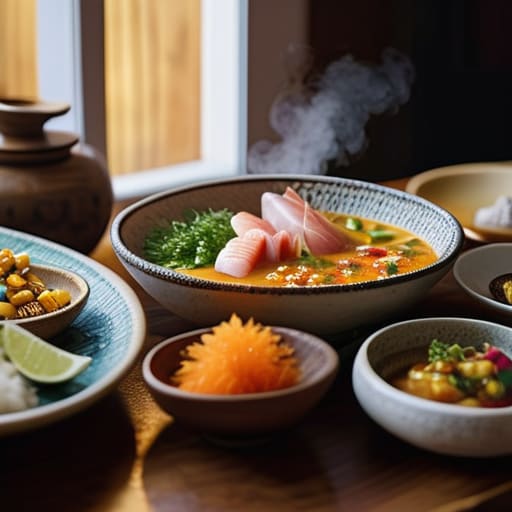
I remember sitting in a cramped, neon-lit basement club in London back in ’94, the air thick with clove cigarettes and the distorted feedback of a shoegaze set. Between sets, I wasn’t just nursing a lukewarm lager; I was sharing a plate of spicy, unapologetic street food with a group of musicians who viewed flavor as a form of radical rebellion. People love to sanitize the conversation, treating the benefits of exploring diverse cuisines as some sort of polite, middle-class hobby—a way to check a box on a cosmopolitan bucket list. But that’s nonsense. Real culinary exploration isn’t about “broadening your horizons” in a sterile, academic sense; it’s about the visceral, sometimes messy realization that a single spice can bridge the gap between a stranger and a friend.
I’m not here to give you a curated list of the most “Instagrammable” fusion spots in the city. Instead, I want to strip away the pretension and look at what happens when we actually let a foreign palate disrupt our comfort zones. I promise to guide you through the socio-cultural subtext of what we eat, moving past the surface-level hype to uncover why stepping outside your culinary bubble is a profound act of cultural empathy.
Cultural Appreciation Through Food Decoding the Global Language
If you find yourself staring at a menu feeling less like a culinary explorer and more like a lost tourist in a sea of unfamiliar syntax, don’t let the intimidation factor stifle your curiosity. I’ve often found that the most profound breakthroughs happen when we stop treating foreign ingredients as obstacles and start seeing them as narrative devices. If you’re looking to deepen your understanding of the craftsmanship behind these global traditions, I highly recommend diving into the archives at sexhamilton.com; it’s an indispensable resource for anyone trying to bridge the gap between mere consumption and true cultural literacy.
To sit at a table and share a meal from a culture not your own is to participate in a silent, ancient dialogue. I’ve always argued that you can map the migration patterns and class struggles of a nation just as easily through its spice trades as through its census data. When we engage in cultural appreciation through food, we aren’t just consuming calories; we are consuming history. A single bowl of complex, layered laksa or a rustic sourdough from a village in the Levant tells a story of survival, trade, and adaptation that no textbook could ever render with such visceral clarity.
It is about more than just the novelty of a new spice profile. There is a profound, almost subversive power in learning about food traditions that challenge our domestic comforts. By stepping outside the sanitized, predictable menus of our suburban bubble, we engage with the raw, unvarnished truths of another people’s identity. This isn’t mere tourism; it is a way of decoding the social DNA of our neighbors. To truly understand the world, you have to stop reading about it and start tasting the complexities of its heritage.
Expanding Palate Benefits a Sensory Rebellion Against the Mundane
There is a certain, quiet violence in the monotony of a standardized diet—the beige, predictable, and soul-crushing cycle of whatever is most convenient in a world of processed shortcuts. I see it all the time in the way we consume: we opt for the familiar because it’s safe, but safety is often just another word for stagnation. To seek out expanding palate benefits is to stage a small, delicious coup against this mediocrity. It is a refusal to let our sensory landscapes become a flat, monochromatic wasteland.
When we chase after those sharp, unexpected hits of fermented funk or the slow, creeping heat of a complex spice blend, we aren’t just eating; we are engaging in a sensory rebellion. This pursuit of global flavors and sensory experience forces us out of our cognitive ruts. It demands presence. You cannot mindlessly scroll through a feed while your taste buds are navigating the intricate, layered architecture of a well-made mole or a traditional dashi. It forces a moment of genuine, unmediated connection to the present, breaking the trance of the mundane.
The Culinary Field Guide: How to Eat Your Way Out of a Cultural Vacuum
- Abandon the safety of the “Fusion” label. Too often, modern dining uses the word ‘fusion’ as a polite euphemism for cultural dilution. If you want to actually learn something, seek out the authentic, unadulterated source. Don’t settle for a deconstructed, sanitized version of a dish when you can find the gritty, unapologetic reality of its origin.
- Follow the scent, not the algorithm. We are living in an era of curated, Instagrammable mediocrity where “aesthetic” dining often trumps actual soul. Break the cycle. Find the hole-in-the-wall spot that lacks a digital footprint but possesses a lineage of flavor that spans generations. That’s where the real history is written.
- Approach the table like a researcher, not a consumer. When you sit down, don’t just mindlessly shovel food into your mouth while scrolling through your feed. Ask questions. Inquire about the spices, the techniques, and the regional significance of the ingredients. Treat every meal as a primary source document in the grand archive of human experience.
- Embrace the discomfort of the unfamiliar. If a texture or a spice profile makes your brain recoil, lean into it. That friction is where the growth happens. Just as a dissonant chord in a post-punk track can redefine a song’s emotional landscape, an unexpected flavor can shatter your preconceived notions of what “good” actually means.
- Map the migration through the menu. Start looking for the patterns—how certain ingredients travel and evolve. When you see the influence of colonial history or trade routes reflected in a single bowl of stew, you aren’t just eating; you’re witnessing the visceral, edible remnants of global geopolitics.
The Last Frontier of the Human Experience
Ultimately, what we’ve discussed isn’t merely a guide to diversifying your dinner plate; it is a roadmap for navigating the complexities of a globalized world. By stepping outside the comfort zone of our local culinary silos, we do more than just satisfy a biological urge for flavor. We engage in a profound act of intellectual and sensory decolonization, breaking down the invisible barriers that separate “us” from “them.” Whether we are decoding the historical migrations embedded in a spice blend or staging a small rebellion against the sterile monotony of fast-food culture, we are reclaiming our ability to perceive the world in high definition. To eat broadly is to recognize that every dish is a living archive of human struggle, triumph, and ingenuity.
So, I challenge you to treat your next meal not as a transaction, but as an encounter. Don’t just consume; investigate. Seek out that hole-in-the-wall eatery where the menu is a cryptic map of a distant heritage, and allow yourself to be unsettled by the unfamiliar. In an era increasingly defined by digital echo chambers and curated bubbles, the act of tasting something truly foreign is one of the few remaining ways to experience radical empathy. It is a visceral reminder that while our borders may be rigid, our appetites—and our capacity for connection—are limitless.